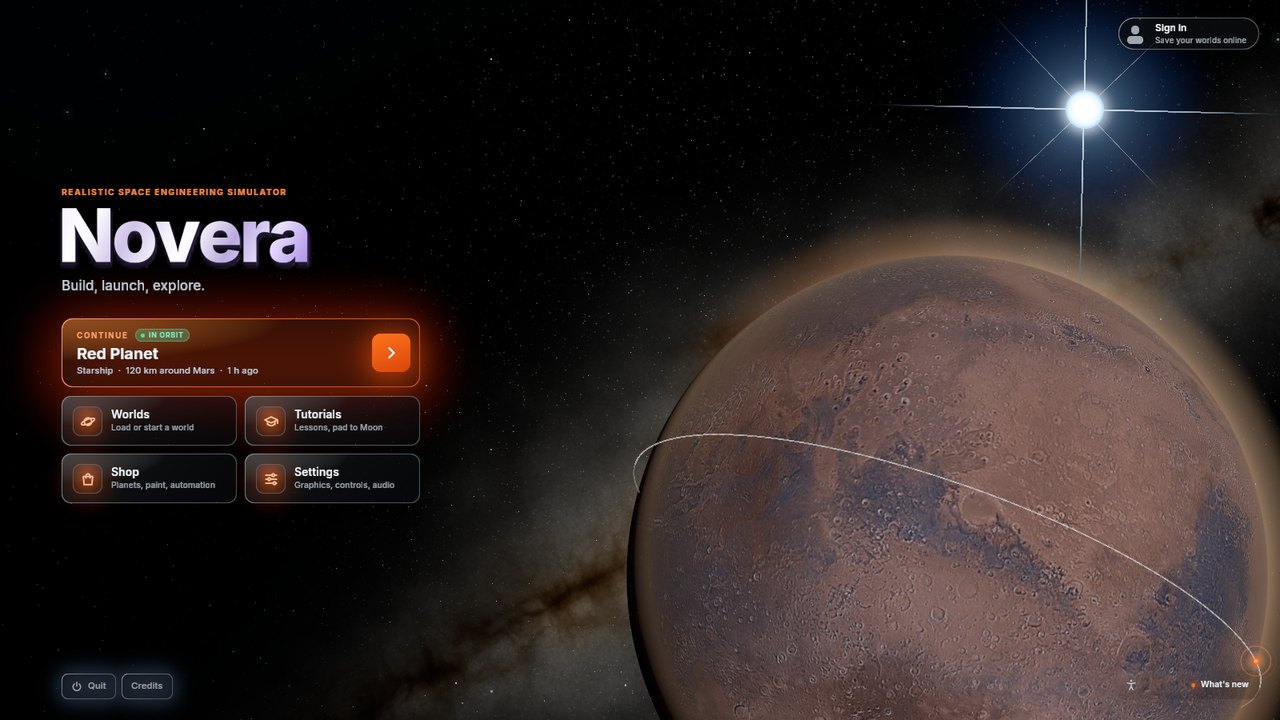
Realistic space engineering simulator
Novera Novera
Build, Launch, Explore.
Assemble a rocket part by part. Launch it into a solar system running real N-body gravity at real scale, on planets built from real survey data. Reaching orbit takes about 9.3 km/s of delta-v, and nothing in the game will hand it to you.
Early build · v0.15.133 · Free while it is in development.
- Solar system scale
- 1:1 Solar system scale
- N-body gravity
- f64 N-body gravity
- Attitude control
- 6DOF Attitude control
- Time warp
- 10M× Time warp
The loop
Build it, launch it, and find out.
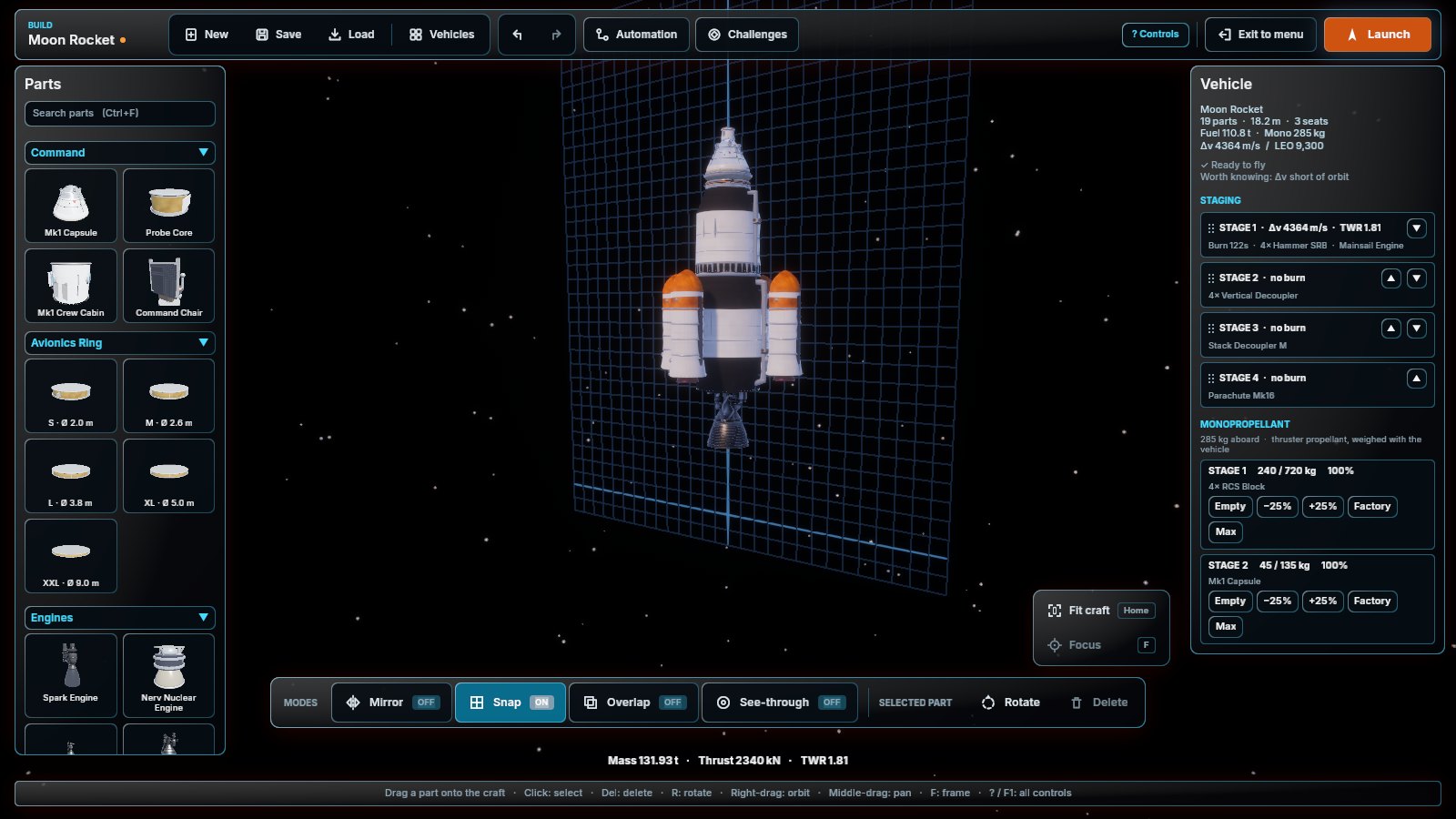
Build it
Snap parts into a stack. Mirror them radially. Set fuel loads, thrust limits, separation force and staging, and watch delta-v and TWR update as you go. If it is too heavy to fly, the numbers say so before you light it.
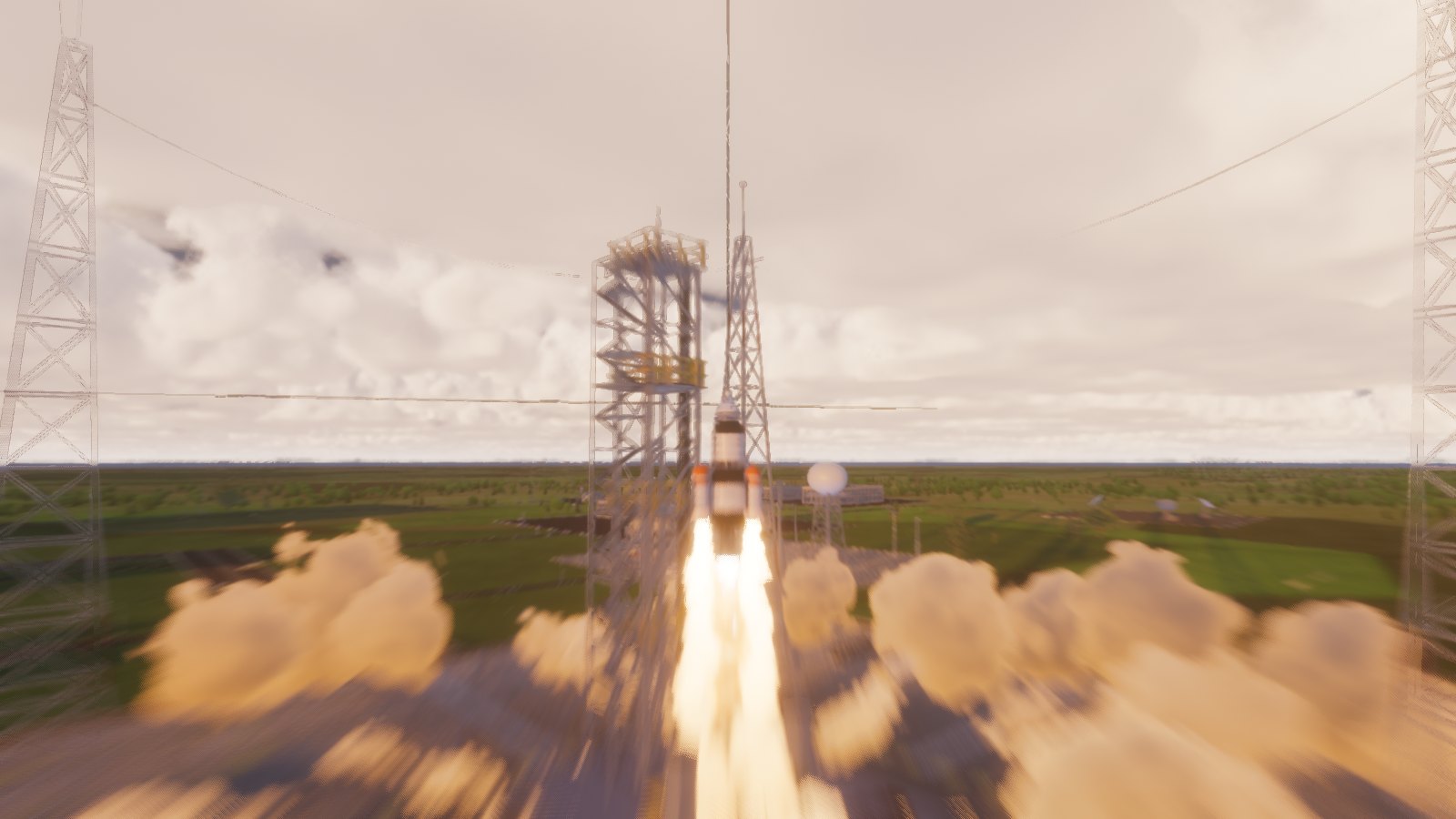
Launch it
Hold-down clamps release on ignition. Air gets thinner, drag falls away, and the ascent guide shows the gravity turn for the body you are on. Stage when a tank runs dry — or let an automation you built do it.
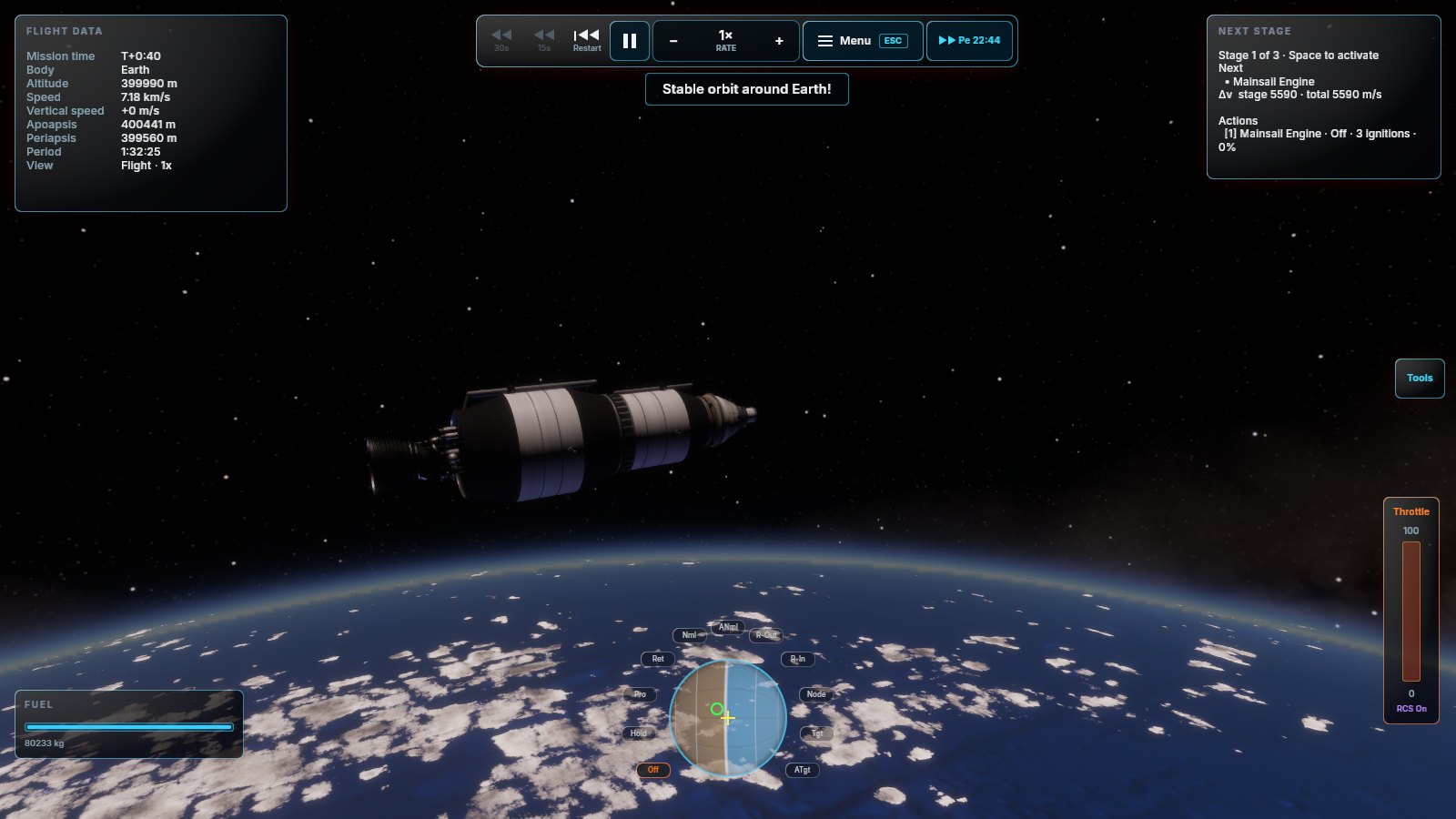
Go somewhere
Pick a destination and the planner solves the transfer, prices the burns, and counts you into them. Dock, land on a spot you clicked, get out and walk around. Then work out how to come home.
Under the hood
The simulation is the game.
Nothing here is a cutscene or a scripted outcome. If a rocket makes orbit it is because the numbers worked, and if it does not, the numbers say why.
-
Gravity that is not a fake
Every body pulls on every vehicle, integrated symplectically in double precision. Spheres of influence are a consequence of the maths, not a rule bolted on top.
-
Real planets, real relief
Imagery and elevation baked from NASA and USGS data. Land in a named crater and it is the crater. Gas giants are oblate; Phobos and Deimos are lumpy.
-
A mission planner that commits
Choose where you want to go. It finds the window, routes through intermediate bodies if it has to, and tells you when to burn and when to stop.
-
Atmosphere that fights back
Per-part drag with stack occlusion, aerodynamic torque, control surfaces that only work where there is air, and entry heating that will end a badly-built descent.
-
Automation out of blocks
Around 160 blocks snap together into a program that flies the vehicle. No text editor, no scripting language to learn.
-
Docking and EVA
Four port sizes, magnetic soft capture, and a hard dock that genuinely merges two vehicles. Then put a crew member outside and let them walk.
-
A career, if you want one
Funds, research, contracts and a crew across three sites. Or ignore all of it and fly sandbox with everything unlocked.
-
Runs on a laptop
Graphics presets from a fanless MacBook Air to a desktop GPU, auto-detected on first launch. There is an iPhone and iPad build too, with touch controls built for it rather than bolted on.
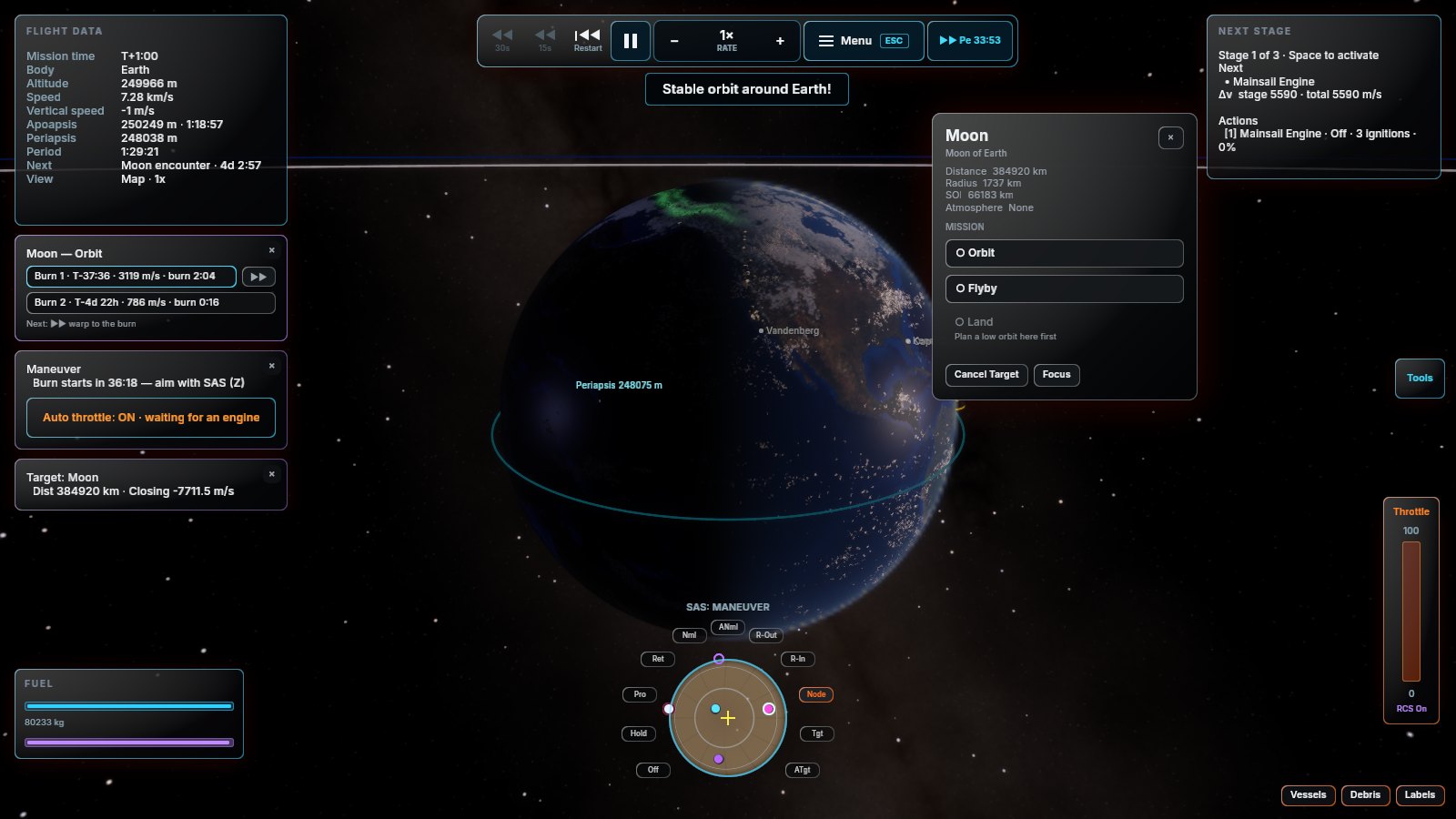
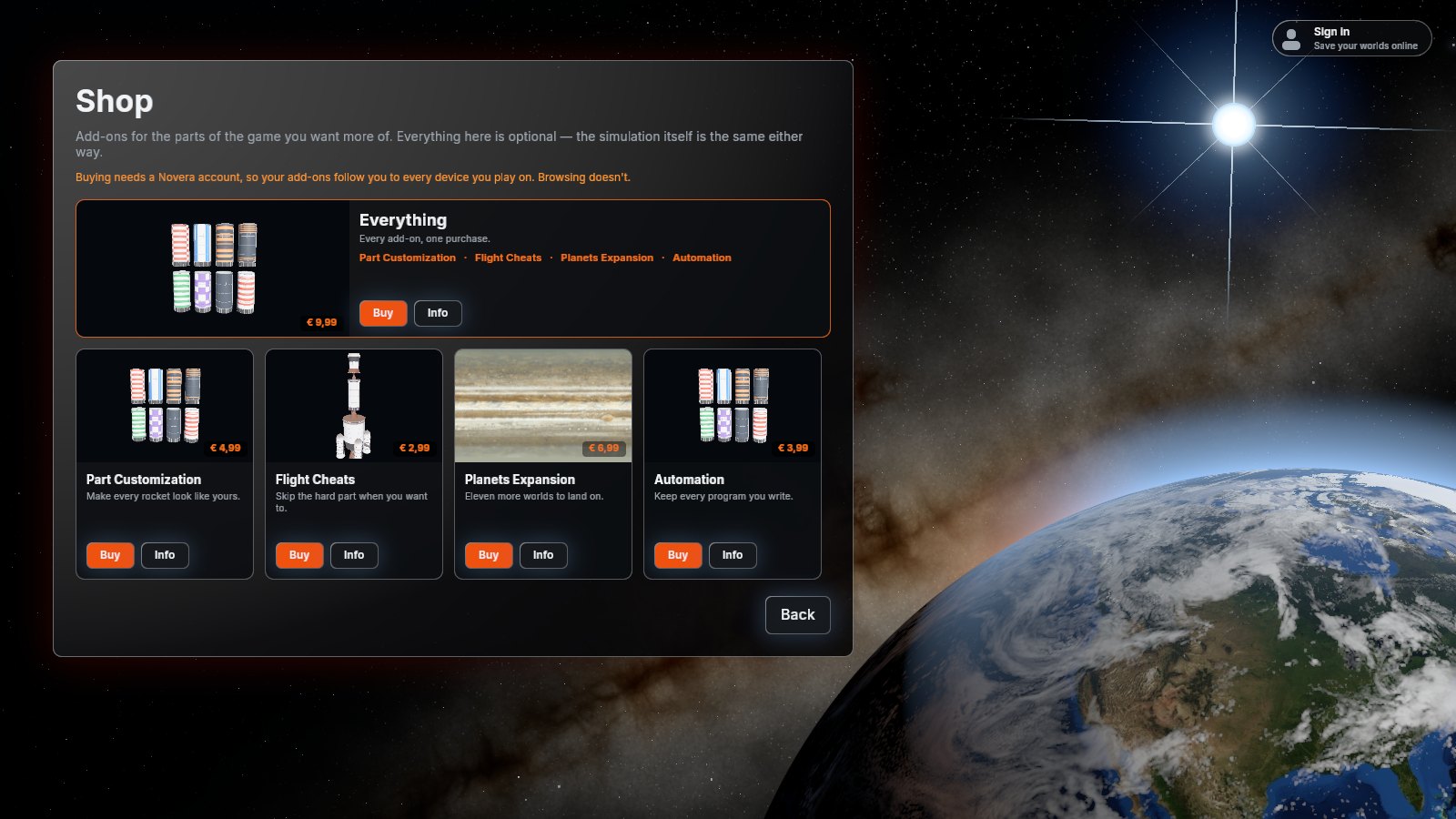
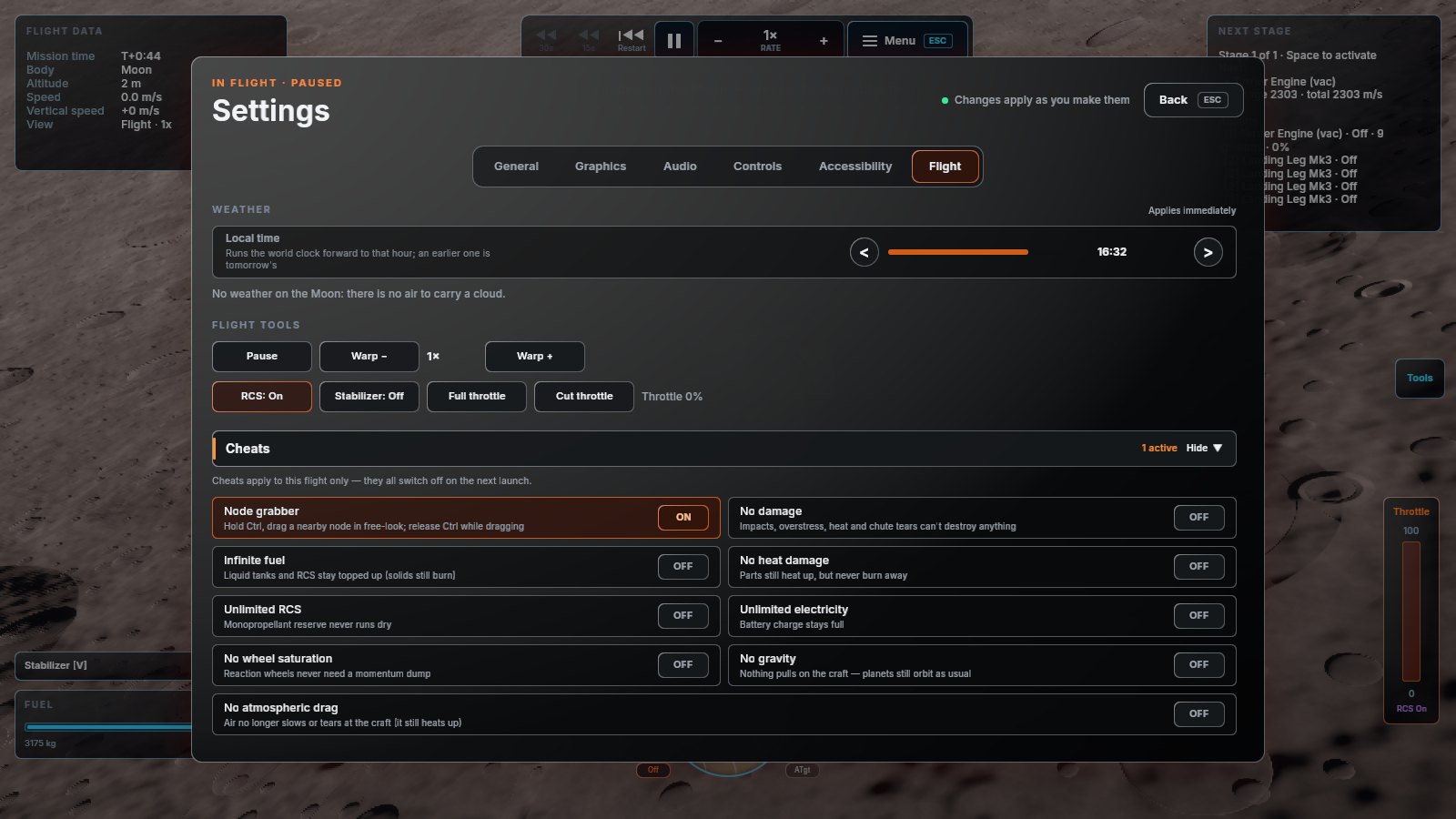
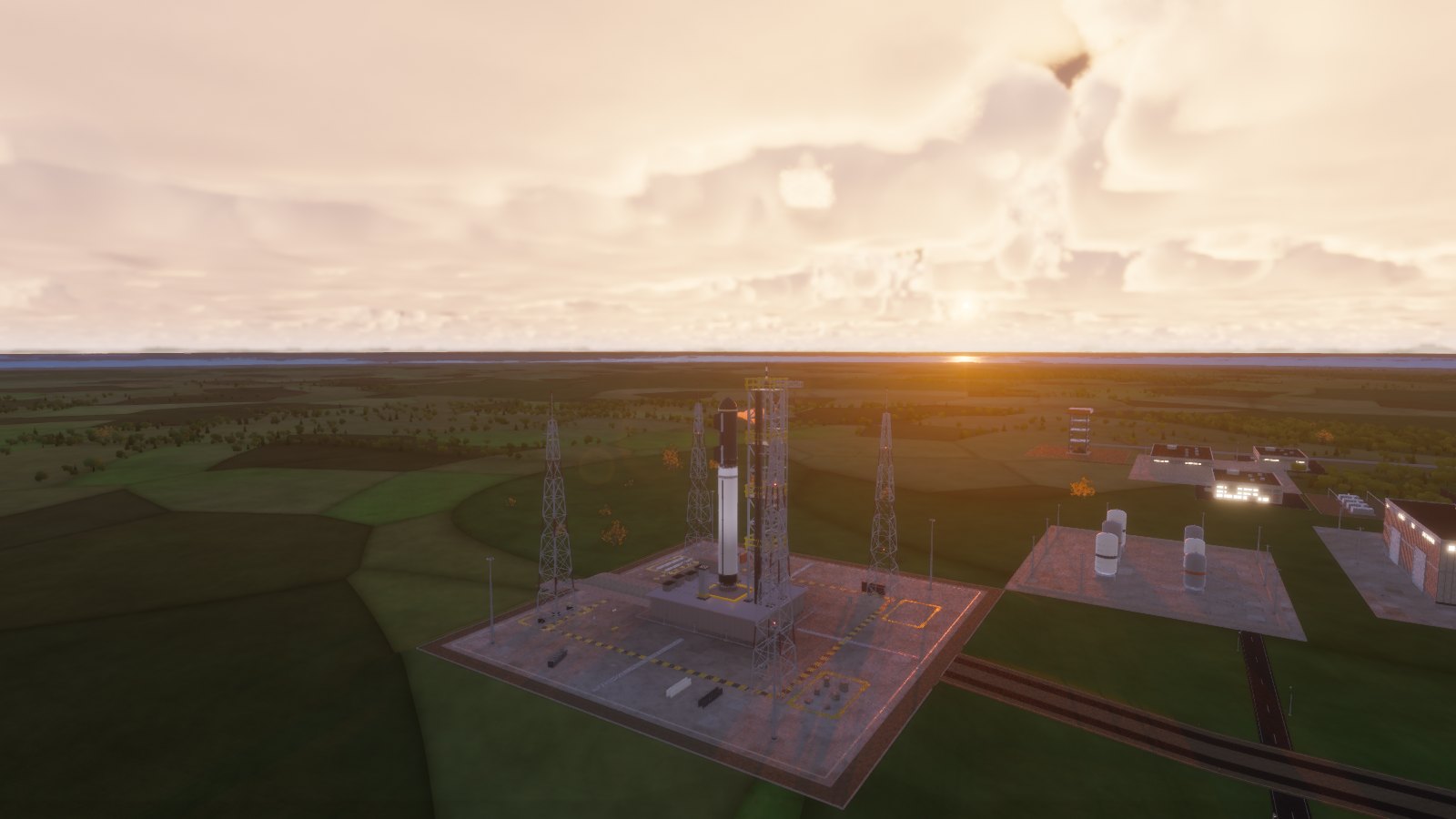
Screenshots
Taken in the running game.
Latest
What has been shipping.
-
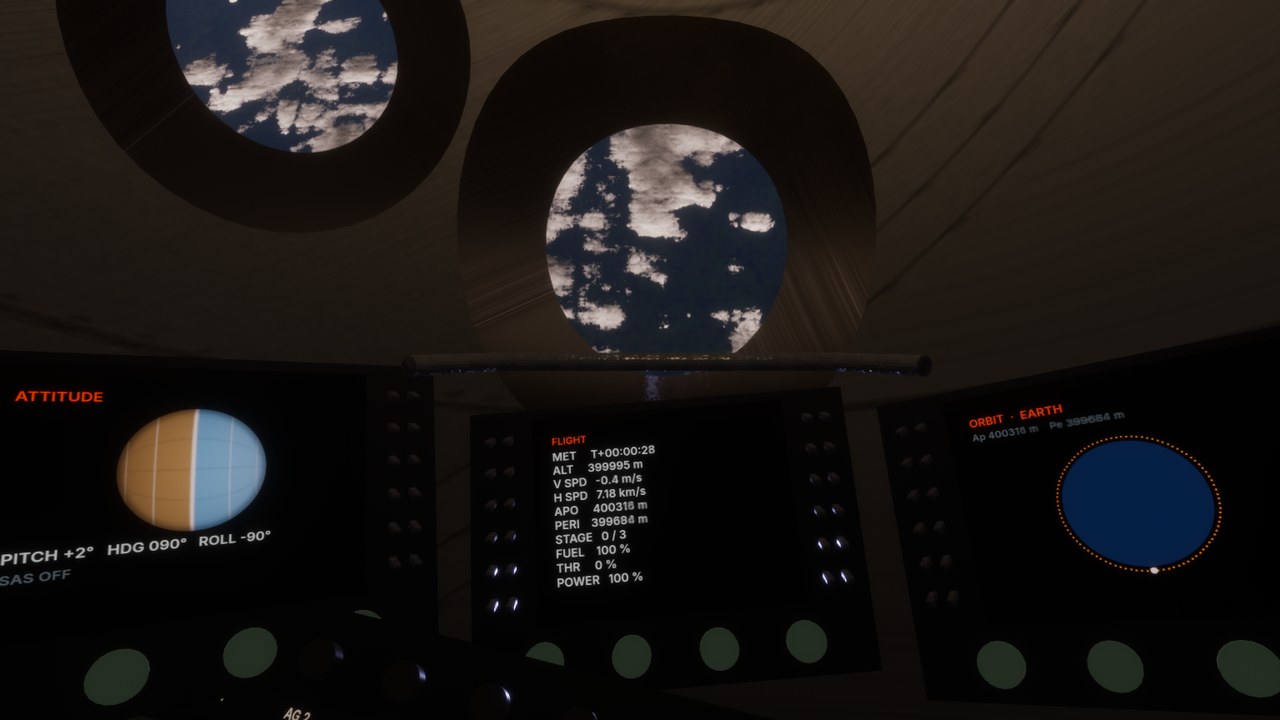
release
0.15: A cockpit to sit in
Press U in a Mk1 Capsule or Crew Cabin and you are inside it: padded walls, the windows the hull carries, couches or seats, breaker panels, the hatch and cabin lamps. Plus 130 updates, up to 0.15.133.
-
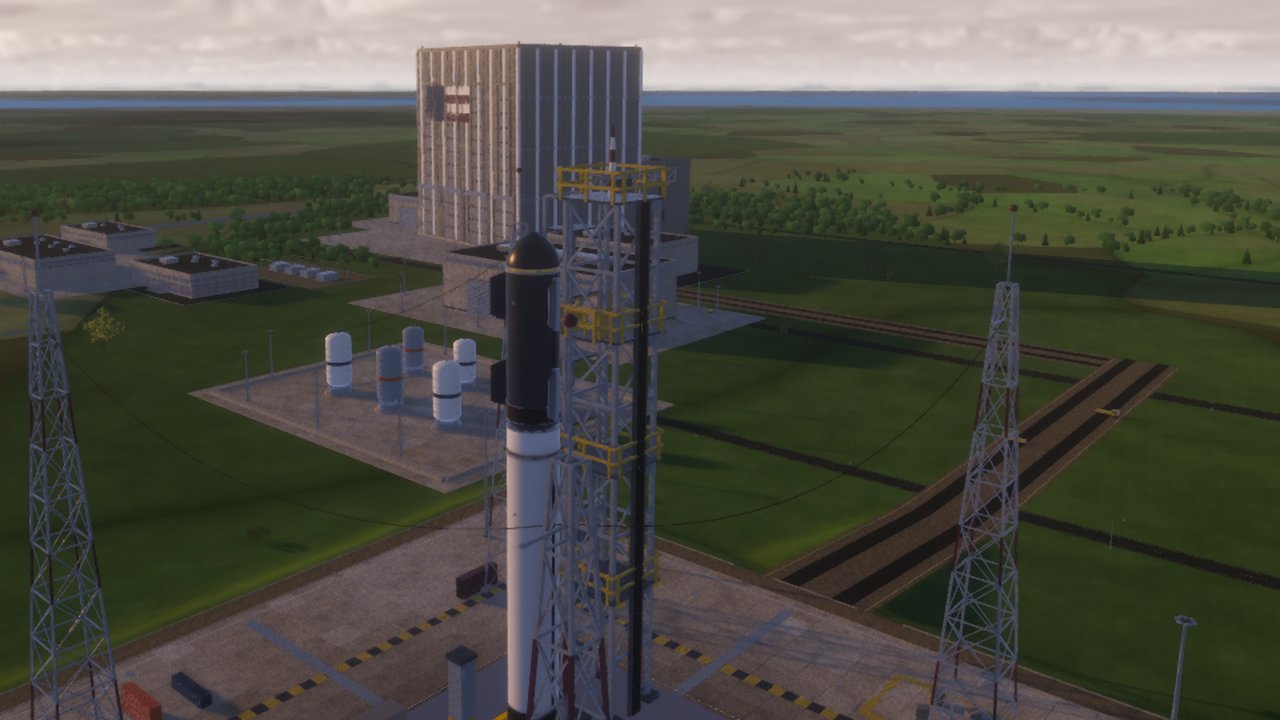
release
0.14: Flaps that fly
Aero flaps steer the way Starship's do: out, each one rests swept back and folds in or out to take drag off or put it on its end of the ship, and you can watch them work through a belly flop. Plus 9 updates, up to 0.14.9.
-
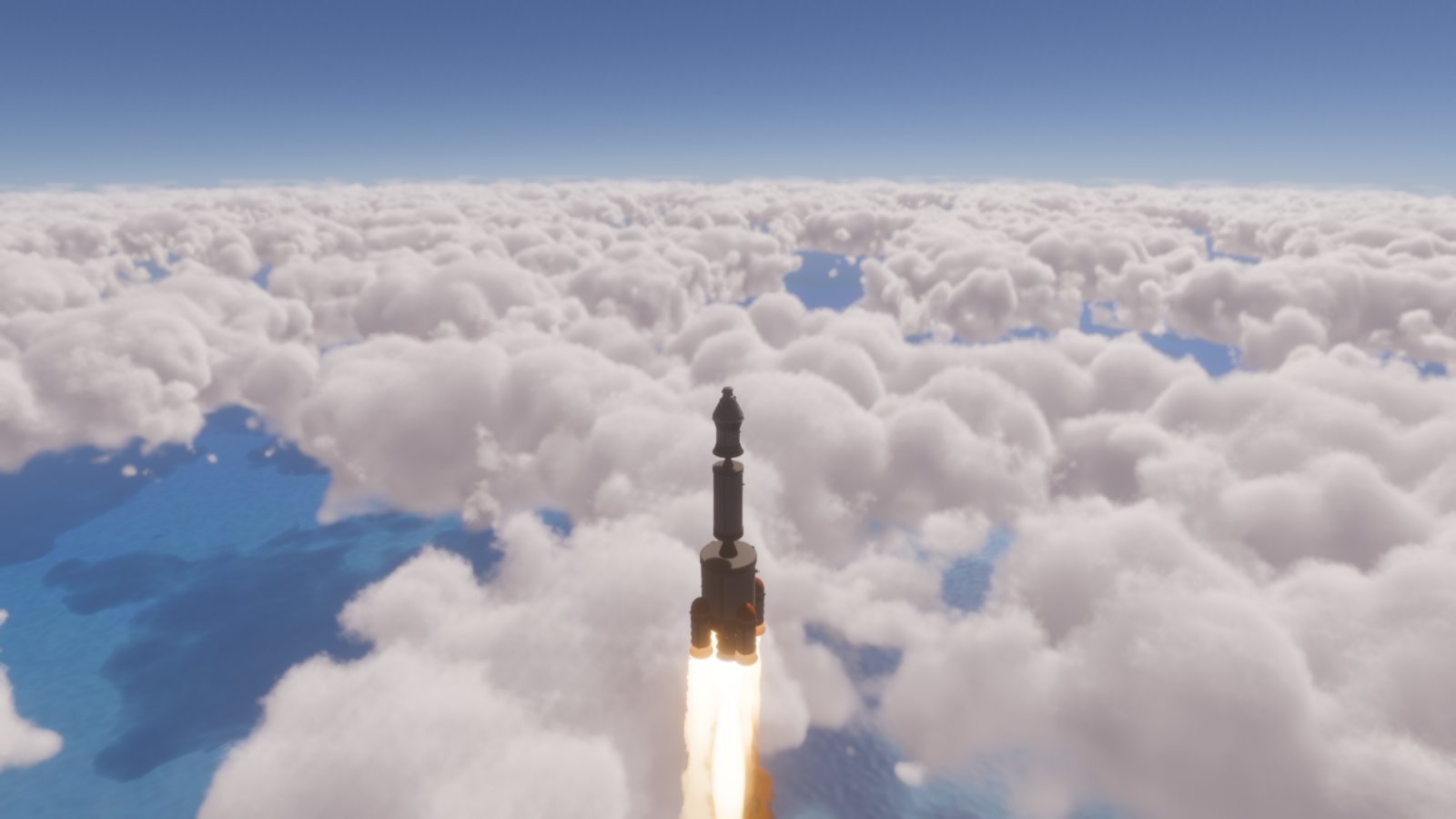
release
0.13: Power you can count on
Batteries hold what a real spacecraft battery holds for its weight, about ten times their old charge. Plus 6 updates, up to 0.13.6.
Take the account with you.
An account links your game installs, keeps your unlocks after a reinstall, and follows you to a second machine. It is free, and the game works perfectly well without one.