release v0.4.2
0.4: Physics closer to the real thing
Every planet has its own air: Mars is thin, cold carbon dioxide, Venus a crushing 92 bar at 737 K, Titan dense frozen nitrogen. Plus 2 updates, up to 0.4.2.
By Royendgel Silberie
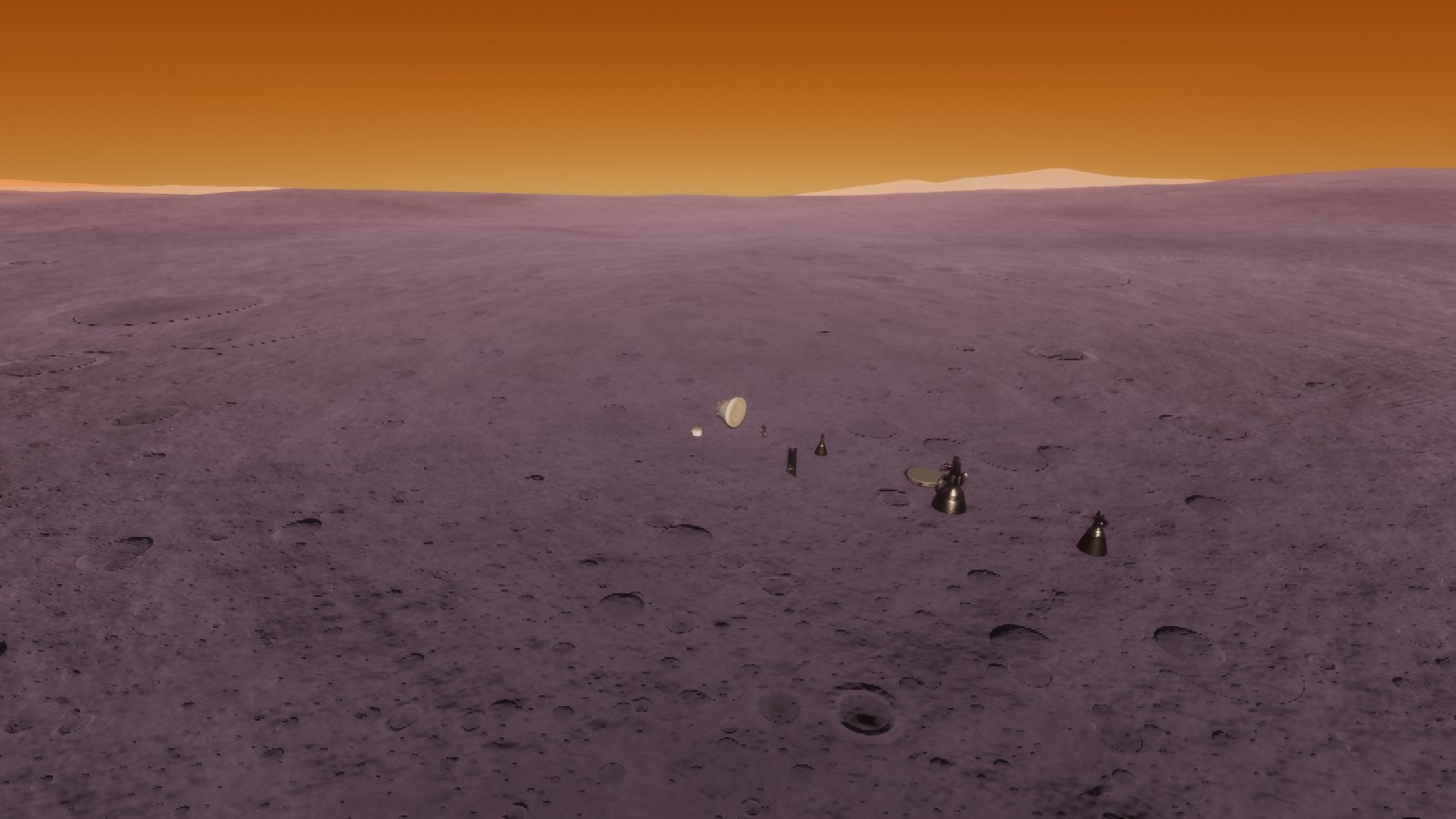
Version 0.4 and every update to it, newest first. The game shows the same notes on its main menu once per version.
0.4.2 · Shop safety
2026-10-04
- Security: the checkout link opens in your browser without passing through the Windows command line, and anything that is not a plain web address is refused.
- A craft that starts inside a world you have not unlocked can no longer stay there by closing the notice: Turn back rewinds out if it can, and otherwise takes you home to the launch pad.
0.4.1 · Safer accounts
2026-10-04
- Security: release builds no longer honour developer switches, so an add-on is unlocked only by the account that owns it, and the game talks only to Novera’s own server.
- A computer turned away because too many are playing stays paused after a restart until a seat frees up, and being turned away no longer counts as checking in.
- Your account is now a Silberie account: the same one signs in to Novera and to ABSOLUTELY NORMAL, and each game counts its own three computers.
- Signing out of one computer frees only that computer’s seat; the others keep playing.
- A signed-in session belongs to the computer it was made on: copied to another, it is turned away.
- The shop won’t sell you something you already own, and a refund no longer takes away what another purchase still covers.
0.4.0 · Physics closer to the real thing
2026-10-03
- Every planet has its own air: Mars is thin, cold carbon dioxide, Venus a crushing 92 bar at 737 K, Titan dense frozen nitrogen. Drag, heating, the speed of sound and engine performance follow each world’s real atmosphere.
- Engines feel each world’s real air pressure: on Mars they lose almost nothing, and on the floor of Venus’s air nothing can push at all.
- Engines burn the same propellant at every altitude, and throttling down low in thick air costs more thrust than it used to. The Terrier and the Tempest Vac now match their real sea-level figures.
- Solid boosters lose thrust to the air at sea level and deliver their full rated efficiency.
- Orbits around spinning planets no longer slowly lose height by themselves, at any time warp.
- Crossing into another world’s sphere of influence at high time warp no longer puts your craft in the wrong place.
- Your craft weighs exactly what its parts weigh: small parts were simulated as 600 kg, so light stages and landers now have the delta-v the builder promises.
- Moons no longer wobble off their orbits when you change time warp.
- In a new world the Moon shows Earth its familiar near side.
- Parachutes open over a realistic distance of air, at a few g instead of twelve, and a craft loaded mid-descent keeps its open canopy.
- Sunlight warms parts in space and a planet’s shadow cools them; solar panels near Mercury tilt away from the Sun to stay cool.
- Automation throttle holds work in thick air and can start from an idling engine, and the Belly flop sample brakes exactly as it plans.